
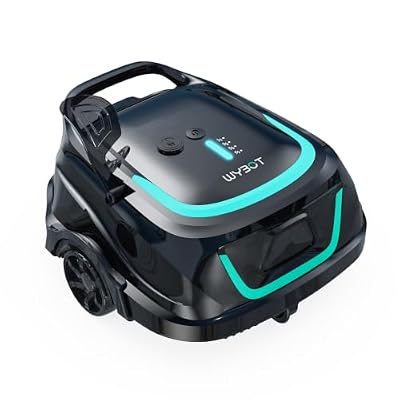
The WYBOT A1 is a small cordless robot for pool floors. The maker's page describes a simple, low-setup machine, not a feature-heavy one. This review covers what that means for fit, daily use and the work you still do by hand.
WYBOT A1 WYBOT A1
Our verdict:
Flat-floor cleaning
A floor-only choice when the exact flat pool and liner match the current US manual.
View on Amazon- Cordless floor-cleaning design
- Maker documents flat-floor use
- Low-battery parking described
Keep in mind: No wall or surface-skimming task. Some catalog runtime and size claims differ from the current US version; confirm the exact model and manual.
What the WYBOT A1 is meant to do
The maker lists the A1 for floor cleaning only. It has dual motors, a fine cotton foam filter layer and a built-in self-parking system. A status light and an LED power indicator show what the robot is doing. The maker also lists a cycle timer and an edge-enhanced cleaning feature. Details are on the WYBOT A1 maker page.
Think of it as a floor sweeper for the pool. It does not climb walls and it does not clean the waterline. The maker's A1 page does not list an app. So treat it as a button-and-light machine.
That narrow scope is not a flaw. It is a job boundary. If your main problem is sand, leaves and dust on a flat bottom, the scope fits. If your main problem is a scummy waterline or algae on walls, it does not.
One more point on identity. The retail listing for this model shows a higher runtime, a larger area figure and four cleaning modes. The current US maker page shows different numbers. This review uses the maker figures and names them as the maker's. Confirm the exact variant before you order.
Pool fit: the flat floor test
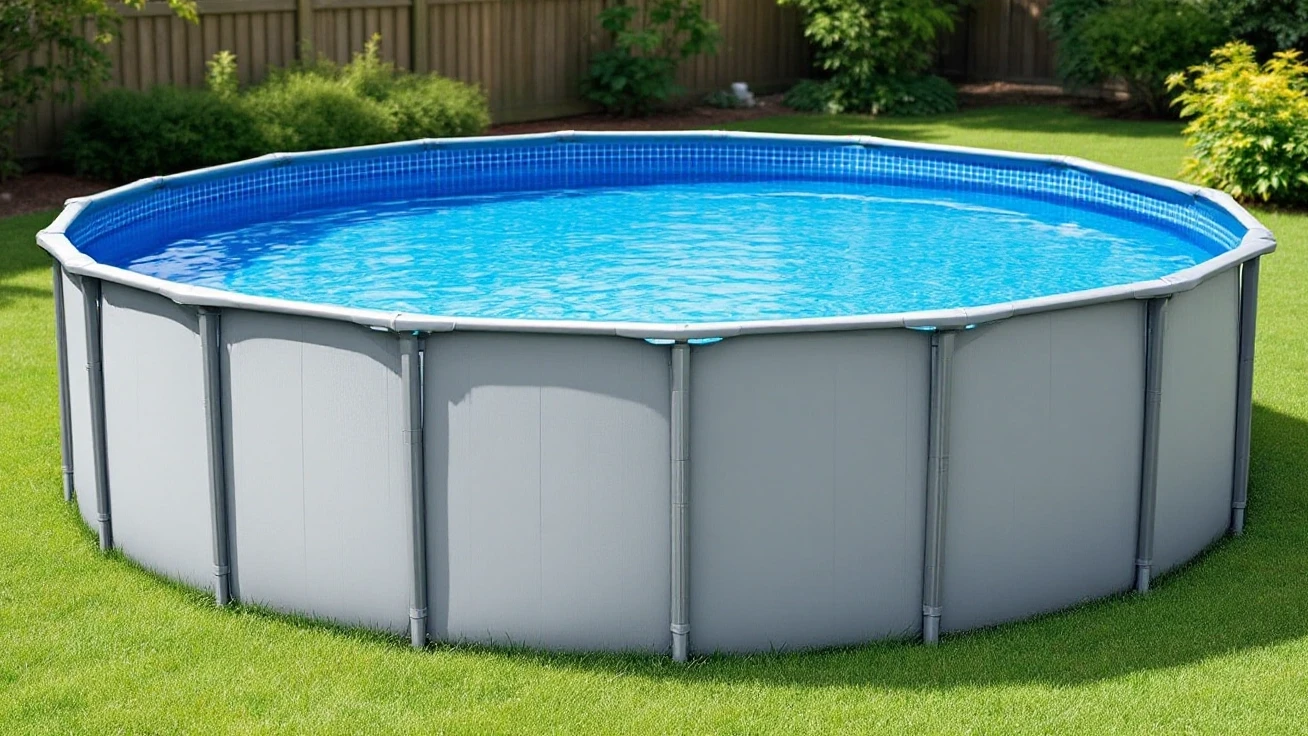
The maker says the A1 suits pools with a flat bottom. The slope limit is under 15 degrees. That is a steep ramp for most backyard pools, but it is a hard limit. Pools with deep ends that slope sharply are a poor match.
The maker's page also points to flat surfaces and above-ground pools as the best fit. It does not promise that every above-ground model works. Wall shape, floor liner texture and small floor features all matter. Check your own pool against the maker's limits, not against a general category.
Wrinkles and small drains deserve a closer look. The maker says the robot may need 2 to 10 minutes to escape wrinkles or drains smaller than 0.2 inches. That is a plain admission that it can get stuck for a while. A liner with many folds will slow it down.
Here is a quick floor check you can do before buying:
- Look for a clear, flat floor with no steep slope.
- Note any liner wrinkles, small drains or floor fittings.
- Measure your pool floor and compare it to the maker's area limit.
- Decide whether steps, ladders and walls matter to you.
The maker lists an ideal pool size below 1,076 square feet. Treat that as the upper end of the intended range. A pool near that size leaves little margin.
Cleaning scope and what stays manual
A floor-only robot leaves several jobs on your list. Walls, steps, benches and the waterline will still need attention. A brush and a net remain useful tools. So does a skimmer net for floating leaves, since the A1 works on the bottom.
The maker's edge feature helps at the floor perimeter. The robot pauses briefly at an edge to boost cleaning before it resumes. The maker's FAQ explains that pause. If you see it stop at a wall, that is the designed behavior, not a fault.
Plan for these manual tasks:
- Brush walls and steps on your usual schedule.
- Net floating debris before the robot runs.
- Handle any area the robot cannot reach, such as tight corners.
- Check the pool after a run and spot clean what remains.
If you want a robot that handles walls and the waterline, look at a different class. The WYBOT C1 cordless pool vacuum is a separate model with a separate feature set. Do not assume A1 shares its abilities. The wider cordless robotic pool cleaner guide shows how that group differs.
Runtime, charging and cordless care
The maker states up to 120 minutes of continuous run time for the A1. That is a maximum, not a promise of full coverage. A cleaning run depends on how dirty the pool is and how the robot moves. Stated runtime does not prove it will cover your whole floor in one pass.
Cordless means no cable to tangle. It also means you handle a few things yourself. You charge it, place it in the pool and take it out. The robot parks itself when it finishes or runs low, which helps retrieval. You still have to reach it, so a very wide pool may need a pole or a net.
The maker gives clear charging cautions:
- Charge the robot fully before you pick a cycle.
- Turn the device off before you charge it.
- Check the charging port for water first. Dampness can cause charging trouble or port corrosion.
These are the maker's own notes. Follow the exact manual for the charging steps. This review gives no battery capacity, lifespan or recharge-time claim, because the maker page used here does not state them for this version.
The cycle timer lets you set how often it runs, up to four times in seven days according to the maker. That helps you spread out cleaning. It does not remove the need to charge between runs. A cordless robot trades cable hassle for battery routine.
Filtration and debris handling
The A1 uses a fine cotton foam layer in its filter design, per the maker. This is a debris trap inside the robot. It catches dirt, sand and leaves as water passes through the unit. The basket or filter needs emptying and rinsing after use.
This matters most in a sandy or dusty yard. Fine material fills a filter faster than big leaves do. Expect to clean it often if your pool collects dust. A clogged filter cuts down what the robot can pick up.
Be clear on what this does not do. Removing debris is not sanitizing the water. The maker's FAQ says the robot is for debris cleaning, not water quality management or ultra-fine filtration. You still need your circulation system and proper chemical care.
The maker also warns about very dirty water. Heavy cloudiness or lots of suspended particles can hurt the robot's work. The advice is to run your pool's circulation and filtration first to clear the water. If your filter is weak, see our above-ground pool filter guide for options.
Who should buy it
Several buyer types fit this robot well. Each has a different reason.
The flat-bottom pool owner. You have a simple floor and a steady stream of leaves and dust. A floor-only robot covers the main job. You keep brushing walls by hand.
The cable-averse owner. You dislike tangled cords and hauling a power supply to the pool. The cordless design removes that. You accept charging and retrieval as the trade.
The routine builder. You want a timer so cleaning happens a few times each week. The cycle timer supports that. You still must charge it before each planned run.
The small-pool owner. Your pool sits well under the maker's area limit. That leaves room for the robot to finish a pass. A pool near the limit gives less margin.
Who should keep existing gear
Some owners are better off not switching. Here are real reasons to hold on to what you have.
- Your pool has steep slopes. The 15 degree limit rules out many pools. A robot that cannot handle your floor adds little.
- Your problem is walls or waterline. A floor-only robot will not help. A brush, a skimmer or a wall-capable robot fits better.
- Your current cleaner works. If a suction or pressure cleaner already keeps the floor clean, a swap may add little. See our notes on suction-side cleaners for that class.
- Your liner has many wrinkles. The maker says wrinkles can trap the robot for minutes. That defeats the point of an automatic cleaner.
- You dislike battery routines. If you forget to charge things, a corded or plumbed cleaner may suit you better.
Robot or manual spot cleaner?
A manual spot cleaner costs you time and effort each time. A robot costs you less effort but needs charging and emptying. The choice is about scope and habit, not about one being better. Our manual pool vacuum guide and handheld vacuum guide cover that route.
A handheld tool can reach steps, corners and small patches. The A1 cannot do that work. A robot handles the open floor while you handle odd spots. Many owners end up using both.
If you already own a manual vacuum, keep it. It still serves the places the robot skips. The A1 then replaces only the routine floor passes. If you want a wider look at brand options, our WYBOT versus Aiper comparison is a useful next read.
Factors to consider when choosing WYBOT A1 cordless robotic pool cleaner
Use this section as a short checklist. Each point ties back to a limit on the maker's page.
Floor shape. Check that the bottom is flat and the slope stays under 15 degrees. Look for deep-end ramps that exceed it. This is the first gate.
Pool size. Compare your floor area to the maker's size guidance. Remember that run time is a maximum. A pool close to the limit may need more than one run.
Surface features. Wrinkles, small drains and floor fittings can slow the robot. The maker names a 2 to 10 minute escape time. Decide whether that delay is acceptable.
Cleaning scope. Confirm you are fine with floor-only work. Plan how you will handle walls, steps and the waterline.
Debris type. Fine sand and dust fill the filter quickly. Large leaves also load it. Be ready to empty and rinse it often.
Water clarity. Very cloudy water hurts robot performance, per the maker. Run your pump and filter first. Your pump choice can matter here.
Charging routine. You will charge it, place it and retrieve it. Keep the charging port dry. Follow the manual for every step.
Exact version. Listings can show figures that differ from the maker page. Match the model name, color and specification before you buy. Do not assume a nearby WYBOT model shares A1 features.
How We Picked
This is specification-based editorial analysis. We did not test the WYBOT A1 or any product mentioned here. Our evidence was checked on October 16, 2026.
We read the maker's A1 page and compared it with the retail listing for this exact version. Where figures differed, we used the maker's stated limits and named them as the maker's. We left out price, rating, warranty, durability, energy and battery claims, because we could not support them for this version.
We also kept each model separate. Features from other WYBOT robots were not borrowed. A catalog listing alone does not prove a product is in current production, so we avoided that claim.
Our verdict on WYBOT A1 cordless robotic pool cleaner
The WYBOT A1 cordless robotic pool cleaner belongs on a flat-floor shortlist only. The WYBOT A1 fits a narrow, clear job. It suits a flat-bottom pool where floor debris is the main issue. It is a poor match for steep floors, heavy wrinkles or owners who want wall and waterline cleaning.
Buy it if the floor check passes and you accept a charging routine. Keep your net and brush for the jobs it skips. Skip it if your pool needs a robot that climbs, or if your current cleaner already does the floor well.
Frequently asked questions
Does the WYBOT A1 clean pool walls or the waterline?
No. The maker describes the A1 as floor only. It pauses at edges to boost cleaning along the floor perimeter, but it does not climb walls. For walls and waterline work, plan on a brush or consider a different robot class.
What pools does the WYBOT A1 fit?
The maker lists flat-bottom pools with a slope under 15 degrees and recommends it for flat surfaces and above-ground pools. Wrinkles and small drains can trap it for a few minutes. Check your own pool floor and size against the maker's page first.
Does the robot make the water cleaner or safer?
It removes debris from the floor, but it does not sanitize water. The maker says it is not for water quality management or ultra-fine filtration. You still need your pump, filter and proper chemical care. Clearer water also helps the robot work better.
Is the stated runtime enough to clean my whole pool?
Not necessarily. The maker states up to 120 minutes of run time, but that is a maximum. It does not prove full floor coverage. Pool shape, debris load and obstacles all affect a run. Expect to check results and run it again if needed.