
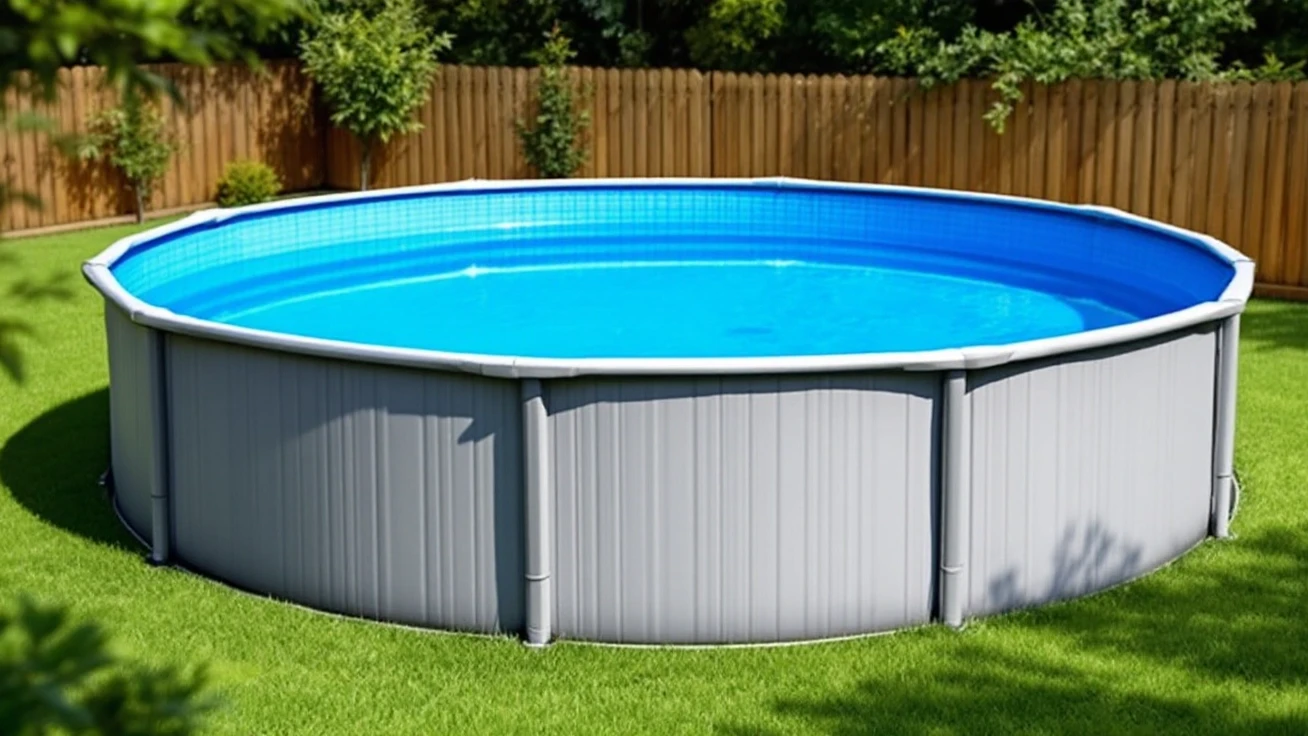
1. AIPER Scuba SE: Flat-Floor Option for Small Above-Ground Pools

Aiper Scuba SE (2024, Silver) Aiper Scuba SE (2024, Silver)
Our verdict:
Smaller flat-floor pools
A cordless option for routine debris on a compatible flat above-ground pool floor.
View on Amazon- Catalog limit: up to 860 sq ft
- Published runtime: up to 90 minutes
- Cordless floor-cleaning design
Keep in mind: Flat floors only. Wall brushing and water treatment remain separate tasks.
The listing for this 2024 silver AIPER Scuba SE describes a floor cleaner for flat above-ground pools. The catalog title gives 1200GPH suction, a 90-minute runtime and a pool size of up to 860 sq. ft. The maker's Scuba SE page supports the flat-floor, above-ground use.
This review covers that 2024 listing only. It does not cover any newer dual-mode SE.
Its job is narrow. It is meant to collect debris from the pool bottom so you skip a manual vacuum pass. It is not a wall scrubber, a waterline cleaner or a surface skimmer. If leaves float for hours before they sink, this model will not touch them.
Compare it for a documented flat-floor above-ground match. Picture a small pool that sees weekend swimmers and light leaf drop from one tree. A floor-only cleaner suits that setup. It also suits a buyer who already brushes the walls by hand.
The size claim needs care. The catalog says the cleaner can clean pools up to 860 sq. ft. as a stated size limit. Neither that limit nor the runtime establishes full coverage.
It does not promise that every part of the floor gets covered on every run. Pool shape, debris load and obstacles all change the result.
Use the exact manual for placement and starting. Self-parking is described in the catalog, but the parking location differs between source wording. We therefore make no precise stopping-location claim for this listing. Plan retrieval using the supplied version's manual.
Retrieval deserves a plan. A cordless unit that parks on the floor in the middle of a deep pool can be hard to reach. Check its approved retrieval method against your actual wall and access point. Do not assume a generic pole or a reachable parking spot solves retrieval.
Exact filter details remain a limit of this comparison. The listing says it lifts and traps dirt, leaves and debris. It gives no filter grade, basket design or cleaning steps.
Check the collector after debris-heavy runs and use its own service instructions. Follow the manual for the exact method.
The catalog also claims a water purging system that drains up to 90% of stored water in 15 seconds. That is a catalog claim and was not tested here. Drain design is relevant to handling, but this review has no measured wet or drained weight. Confirm the supported lifting method before buying.
Charging follows one rule. Use the exact manual, the matching charger and a dry charging area. Do not charge it near wet decking or while it drips. Let the unit drain before you carry it indoors.
Choose a simpler model if your pool is small and your needs are plain. Wall or waterline functions add little to a floor-only task. A simpler task does not remove the need for exact liner and geometry support. Check the AIPER Scuba SE guide if you want more on this line.
A slope outside the supported floor shape rules it out. For wall film or floating leaves, compare a tool documented for that separate task. Even a good floor robot does not replace water care, brushing or filter upkeep. It also does not sanitize the water.
2. AIPER Scuba S1 (2024): Wall and Waterline Work for Larger Pools

Aiper Scuba S1 (2024) Aiper Scuba S1 (2024)
Our verdict:
Add wall and waterline work
Compare the listed vertical tasks only when the exact 2024 unit and pool structure are supported.
View on Amazon- Catalog lists floor, wall and waterline tasks
- 2024 catalog runtime: up to 150 minutes
- Catalog lists above-ground and in-ground use
Keep in mind: Not the current US upgrade. Do not transfer its 180-minute runtime, MicroMesh, app or shallow-area features. Exact supplied manual, filter and geometry fit need confirmation.
The 2024 AIPER Scuba S1 is the broadest listing in this group. The catalog title names 150 minutes of runtime, wall and waterline cleaning, and pools up to 1600 sq. ft. It lists both inground and above-ground use.
The maker's Scuba S1 page describes a current version with different specs. Treat that page as a version warning, not proof of every 2024 detail.
That version gap matters. A newer package may list a longer runtime, a finer filter, an app or a shallower platform. None of those details are confirmed for this 2024 listing. If you buy by a spec you saw on the maker page, check the model year first.
The job here goes past the floor. The catalog says it scrubs the floor, walls and waterline in one cycle. It lists tank-style tracks for traction on uneven surfaces, slopes and drains.
It also lists Smart Wavepath Navigation 2.0 with 11 sensors. These are catalog claims, not test results.
Consider its documented vertical tasks only when the exact above-ground wall and liner are supported. Think of a round pool with sunscreen and pollen at the edge. A wall-climbing unit may save you some hand scrubbing there.
It is also a fit if your pool has a gentle supported slope. But exact geometry, liner type and the manual still decide.
Wall climbing on a soft liner is a real question. The catalog does not say the unit suits every liner or wall. Some above-ground walls flex under load or have rails and trim near the water.
Read the manual for liner and wall limits before you buy. That caution holds for any climbing robot.
The catalog lists four modes: Auto, Wall, Waterline and Eco. Keep these as the 2024 listing's modes. The current maker page uses a different mode list, and the two should not be merged. Confirm the names in the manual that ships with your unit.
Use the supplied manual to learn what each mode does and when it is appropriate. An Eco name does not establish a short cycle, a quick-clean function or a suitable schedule. Runtime of 150 minutes also does not equal full coverage of 1600 sq. ft.
Retrieval still needs an exact plan for a wall-capable unit. A unit that works at the waterline may stop near the wall or the floor. The evidence does not establish this 2024 model's parking behavior.
Check the approved retrieval method and any required separate tool. Do not assume it parks at the edge.
Filter care is also unconfirmed. The catalog does not give a filter grade for this listing. The finer filter and MicroMesh details on the maker page belong to the current version.
Do not carry them over. Expect to open and rinse the filter after dirty runs, per the manual.
Charging follows the same rule. Use the exact manual, the matching charger and a dry charging area. Do not treat a cordless design as permission to use it with an app or other gear. App support is not documented for this listing.
Choose a simpler model if you only need floor work. Climbing and waterline functions may be unnecessary for that task. Floor-only status still does not prove compatibility with a delicate liner. The WYBOT versus AIPER comparison may help if you are weighing brands.
Pause the S1 choice when the exact liner, steps or trim are unsupported or uncertain. For floating debris, compare a surface tool. None of these robots skims. It also does not kill algae or remove the need for brushing and water care.
3. WYBOT A1: A Separate Flat-Floor Option
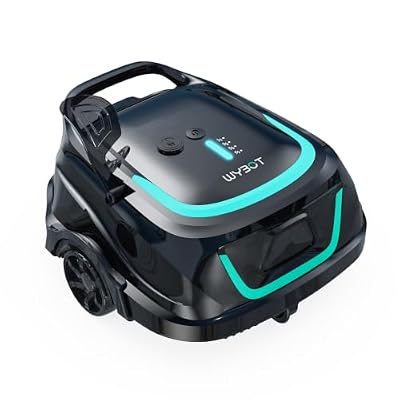
WYBOT A1 WYBOT A1
Our verdict:
Flat-floor cleaning
A floor-only choice when the exact flat pool and liner match the current US manual.
View on Amazon- Cordless floor-cleaning design
- Maker documents flat-floor use
- Low-battery parking described
Keep in mind: No wall or surface-skimming task. Some catalog runtime and size claims differ from the current US version; confirm the exact model and manual.
The WYBOT A1 is a floor cleaner for above-ground pools. The catalog title includes higher runtime and area claims than the current US maker page. The maker's WYBOT A1 page lists the current model as flat-floor only, with 120 minutes and 1076 sq. ft.
These are the current US version's own documented bounds. The catalog's higher numbers should not be read as current maker facts.
That difference is worth stating plainly. Do not resolve that difference by assuming rounding or silently selecting a larger figure. Confirm which version and manual the supplied unit uses.
Treat the 1076 sq. ft. figure as a rated ceiling, not a coverage promise. Pool shape and debris load affect whether a routine is useful; the published ceiling is not a measured coverage result here.
The A1's job is floor cleaning. The selected listing describes layered collection media, but this review does not establish a fine-particle pickup advantage or adopt its percentage comparison. Confirm the supplied collector before relying on it for dust.
Compare it for a compatible flat floor. For a dusty entry patch, check retention and reach before choosing a whole-floor routine. Media design alone does not establish that every fine particle stays captured.
Catching fine debris is not the same as sanitizing the water. Water testing, treatment and circulation remain separate care tasks.
The catalog includes floor-shape and depth restrictions while using mixed pool-type wording. Do not turn those into permission for a sloping above-ground floor. The current US maker describes flat-floor use; confirm the supplied manual and exact pool before selecting it.
Wrinkles are the practical risk. Many above-ground liners develop folds at the wall base or near the ladder. If your floor has deep creases, a floor robot may stall or tilt.
Do not alter the liner to make a cleaner fit. Review the pool and cleaner manuals, or keep a supported manual route while fit remains unresolved.
Use the supplied manual for placement and starting. The catalog says it begins cleaning on entry and pauses at pool edges before resuming. When battery power is low, it parks near the pool wall. Check how that described parking behavior relates to your actual access point.
Parking near the wall is a retrieval aid, not a skimming feature. The unit sits on the floor, not at the surface. It will not collect leaves that float. If leaves arrive in bulk, scoop the surface first so the floor robot is not overloaded.
The supplied collector needs inspection and care under its own instructions. Rinse it after dusty runs, and check the foam layer for wear as the manual allows. The notes give no filter micron rating that we can confirm, so we leave it out. The manual is the source for cleaning steps.
Charging follows the shared rule. Use the exact manual, the matching charger and a dry charging area. This comparison gives no charge-hour schedule for an unmatched version.
Choose a simpler model if you rarely see fine dust. The SE may do the floor job at a smaller scale. Compare the SE and A1 without assuming either picks up faster. No pickup speed test is available here.
Skip the A1 if you want wall or waterline work. Skip it if your floor is wrinkled or steeply sloped. App support is not documented for this listing either. The WYBOT reviews page has more background on the brand.
Factors to consider when choosing a cordless robotic pool cleaner
Start with the job you need done. Floor-only, wall-climbing and waterline cleaning are different jobs. A floor robot suits a pool where scum is rare.
A climber suits a pool where film builds at the edge. Pick the job before you compare numbers.
Next, look at your pool floor. A flat, smooth bottom suits the SE and A1. A floor with a gentle supported slope may call for a tracked climber like the S1.
Deep wrinkles can trouble any of them. Review visible floor shape from a suitable access point and compare it with the written limits. Do not press or alter the liner to test a machine match.
Pool size and runtime need honest math. Runtime is time in the water, not area cleaned. A rated battery limit does not establish how many useful passes a layout receives.
Obstacles and the remaining manual tasks can matter more than the largest time figure. Large rated areas help only if the path is efficient and the floor is clear.
Debris type changes the pick. Leaves fill a basket fast and may block flow. Sand and silt load a fine filter quickly.
If a tree drops leaves nightly, you need a frequent emptying habit. If dust is your issue, a finer filter layer like the A1's catalog claim may help. Neither fix replaces surface skimming.
Think about retrieval before you buy. A cordless unit that stops mid-pool needs a pole or a long reach. A pool with a tall wall and a deck that is far from the water makes this harder.
Self-parking near the wall, as the A1 catalog lists, may help. The SE's exact parking location is disputed in the sources, so this review does not promise a return point.
Check the walls and trim. Above-ground pools often have top rails, flexible walls and ladders. A climbing robot may meet all of these.
Read the manual for liner and wall limits. If you cannot confirm fit, keep the selection open. A floor-only model also needs documented support.
Filter care sets your weekly time. Empty and rinse after heavy runs. Let the filter dry in a shaded place as the manual allows.
A clogged filter lowers pickup no matter how strong the suction number is. If you dislike rinsing, expect to dislike any robot in this group.
Charging needs a dry spot with an outlet. Use the exact manual, the matching charger and a dry charging area. Do not charge on a wet deck or inside a splash zone. If your outlet is far from the pool, plan where the unit will sit between runs.
Do not mix versions. The S1 and the A1 each have a current maker page with different figures than the catalog title. Match the model year on your box to the manual.
Keep each source tied to its own version; the smaller number does not by itself prove an exact match. Ask the seller which version you will receive.
Do not expect more than the listing says. None of these is a surface skimmer. None kills algae or removes the need for brushing and water care.
Fine debris capture can make water look clearer. It does not sanitize it.
Last, think about budget in plain terms. Compare the added functions with the care they require rather than assuming more features improve the task. If your pool is small and flat, a simpler model may be the right call.
For a tighter budget, the robotic pool cleaners under $500 guide covers that angle. If you still hand vacuum, the pool vacuuming guide shows what the robot replaces.
Match the cordless routine to the work left over
Start with a pool that has a flat floor and light settled debris. A floor-only machine may reduce hand steering while leaving wall brushing, floating leaves and water care unchanged. Compare SE and A1 on the exact supported pool, collector and retrieval method. Without a pickup test, a longer time figure does not settle which one leaves less work for you.
Now consider a pool with a recurring waterline film. The S1 listing adds a relevant task, but wall support is the first question. Flexible walls, trim and the shape where floor meets wall may matter.
If the supplied manual does not support that structure, the extra mode is not a reason to try it anyway. A supported brush and floor routine can remain the practical choice.
A third pool gets a small sandy patch by the ladder. Before buying a whole-floor robot, compare the collector and manual work actually needed at that spot. A machine that moves automatically may still leave a corner or step outside its route.
A local tool may be enough, especially when you already own suitable gear. The decision is the recurring task, not whether cordless sounds more convenient.
Treat a version mismatch as missing evidence
A current product page can explain why two descriptions differ without proving what arrives in a particular box. For S1, the catalog explicitly names a 2024 version. Newer app or filter features should stay with the version that documents them. Check the full model label, supplied manual and order contents before relying on any of those extras.
The same approach applies to A1 runtime and area claims. Current US bounds belong to the current maker version. They do not establish that an item with different listing figures has changed its specification.
Ask for the exact manual and identify which version is supplied. If the answer remains unclear, keep the purchase decision open rather than combining the most attractive fields from both sources.
How We Picked
This roundup was written on October 16, 2026. We did not handle or test any model. Everything here comes from catalog listings and the three manufacturer pages linked above.
We kept three separate model families, not three colors of one. The S1 and A1 pages describe current versions that differ from their catalog titles. Each figure remains tied to its own version.
The current US A1 bounds describe that maker version; they are not a silent correction to the catalog item. Current S1 app, filter and runtime features are not transferred to the 2024 listing.
We left out unconfirmed claims. That includes filter ratings, app support, warranty terms, prices and durability. We also left out Renewed listings. Our standards are on the editorial policy page, and corrections go through the sources and corrections page.
Our verdict on cordless robotic pool cleaner
A cordless robotic pool cleaner should match the supported floor and the work you want to reduce. Compare the Scuba SE for a documented flat-floor task when wall brushing remains yours. No pickup ranking against A1 is established here.
For a larger pool with a waterline film, the 2024 AIPER Scuba S1 is the only one here that lists wall and waterline cleaning. Check liner and wall fit in the manual first. Do not assume the newer maker page matches your unit.
The WYBOT A1 is another flat-floor option. Confirm its exact collector before relying on fine-dust retention. Plan around the maker's 120 minutes and 1076 sq. ft. Avoid it if your floor is wrinkled or steeply sloped.
Whichever you pick, keep the water care routine. A robot helps with floor debris. It does not skim, sanitize or replace brushing.
Frequently asked questions
Does a cordless robotic pool cleaner replace skimming?
No. The models here work on the pool floor, and the S1 listing also names walls and waterline. None is a surface skimmer. Floating leaves still need a net or skimmer. Parking near a wall is a retrieval aid only, not a surface cleaning feature.
Does the listed runtime mean the whole pool gets cleaned?
No. Runtime is battery time in the water, not proof of full coverage. Pool shape, debris load, obstacles and liner folds all change the result. Treat the rated square footage as a ceiling. Keep figures tied to their own version, and confirm the supplied model and manual.
How should I charge a cordless pool robot?
Follow the exact owner's manual. Use the matching charger and a dry charging area. Do not charge near standing water or while the unit is still wet. A cordless design means no power cable while cleaning. It does not change charging rules.
Can these robots sanitize my pool water?
No. Capturing fine debris can help water look clearer, but it is not sanitizing. None of these models kills algae or replaces chemical balance. You still need circulation, water testing and brushing. Treat the robot as a floor cleaning aid, not a water treatment.