
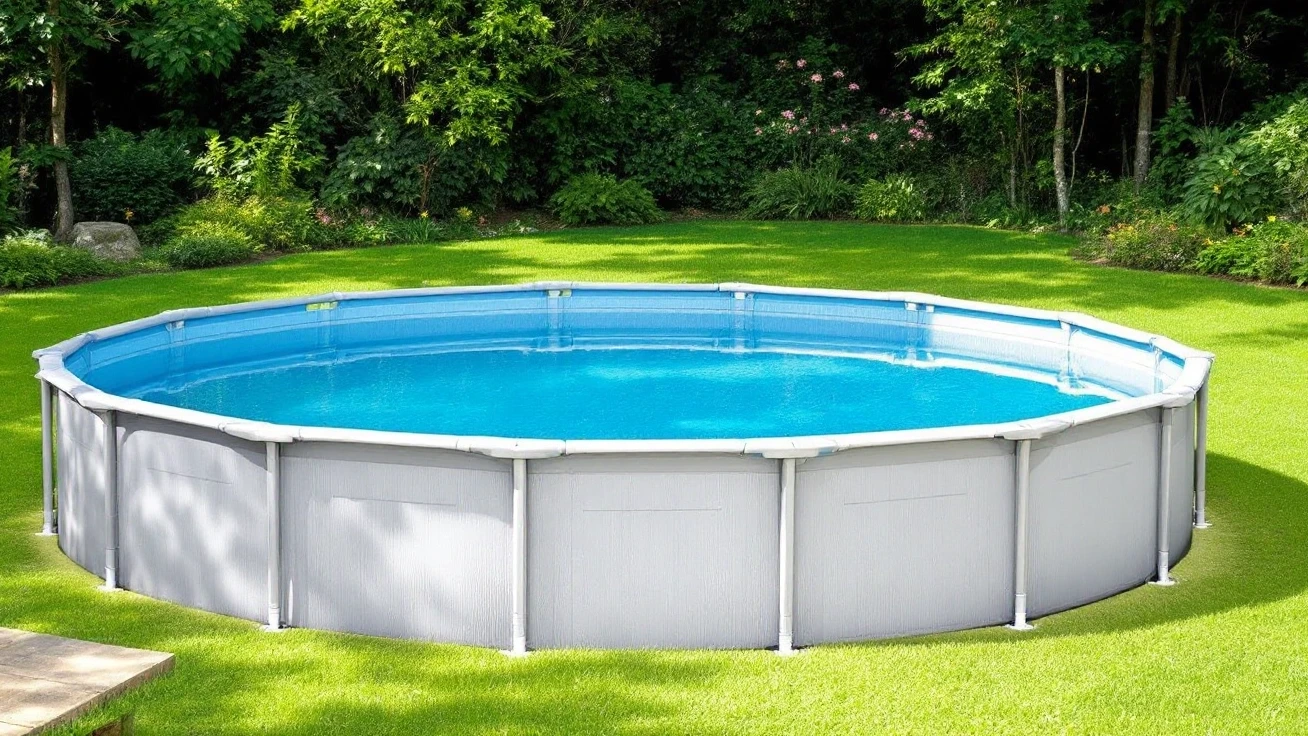
These WYBOT pool cleaner reviews compare three model families by the work they cover: a flat floor, walls and the waterline, or those surfaces with dual filtration. Sources were checked October 16, 2026. The comparison uses catalog and manufacturer information, with no hands-on testing.
Two kinds of numbers appear below. Catalog claims come from the retail listings. Manufacturer facts come from the current US WYBOT pages. Where they differ, this comparison uses the manufacturer’s documented current US version. It does not combine competing figures into one specification.
1. WYBOT A1: the floor-only choice for flat, simple pools
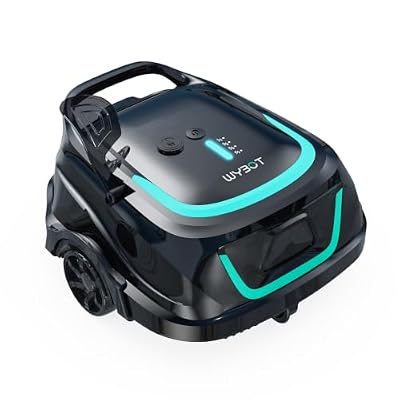
WYBOT A1 WYBOT A1
Our verdict:
Flat-floor cleaning
A floor-only choice when the exact flat pool and liner match the current US manual.
View on Amazon- Cordless floor-cleaning design
- Maker documents flat-floor use
- Low-battery parking described
Keep in mind: No wall or surface-skimming task. Some catalog runtime and size claims differ from the current US version; confirm the exact model and manual.
What the A1 is for
The A1 is a cordless floor cleaner. WYBOT's current US page for the A1 lists flat floors and floor cleaning only. It gives 120 minutes of runtime and 1,076 sq ft.
Some retail A1 listings give different runtime and area figures. Those do not extend the current US model’s documented limits. A mode count does not establish additional cleaning surfaces either: use the exact manual to identify what each mode actually does.
The job is narrow, and that is the point. If your pool has a flat bottom and the dirt settles on the floor, a floor-only robot covers the main task. You pay no attention to wall modes you will not use.
Fit and limits
The listing title says it is for above ground pools. The listing's own note says it suits in-ground pools under 2.5 meters of water depth. It also warns against slopes over 15 degrees and significant bottom wrinkles.
That note matters for soft-sided pools. A liner that bunches near the base can create wrinkles. A floor that rises toward a center drain can create slopes. Both are exactly what the note warns against.
WYBOT's pages classify the model families as suitable for above ground and in-ground use. That support depends on your exact floor, liner and structure fitting the manual. Check those three things before you order.
Compare the pool maker’s floor description with the A1 manual. Include any slope, ridge or liner wrinkle in that check. A flat-floor classification is a real constraint, so do not replace it with an assumption based only on pool volume.
Daily routine
Place the robot in the water and start it. The listing says it begins cleaning on its own. It also says it pauses at pool edges to improve cleaning before it resumes.
Choose cleaning and retrieval times around the exact manual and the debris you see. Check the first runs rather than assuming a fixed schedule will work all season. A battery duration does not establish permission to leave the robot in the water overnight.
The listing says it parks near the wall when the battery runs low. Read that as a retrieval aid. It does not mean the robot cleans the wall or skims the top.
Do not assume the robot reaches every corner in one battery run. Runtime is time on the battery. Coverage depends on the pool shape and the floor.
Filter care
The listing describes primary filter media and a foam layer. A claimed filtration improvement is not used to rank it here because the comparison method is not established. Confirm the included media for your exact unit before buying an extra filter.
Practical care is simple. Lift the robot out and let the water drain. Open the filter as the manual shows. Rinse it with clean water and check the foam layer for trapped grit.
Check the care instructions for each type of media. The method for a rigid filter basket may differ from the method for foam. Follow the exact washing, drying and replacement steps rather than applying one cleaning method to every layer.
Fine debris capture is not sanitizing. A filter that holds sand and dirt does not kill algae or bacteria. Your water chemistry plan still does that work.
Retrieval and charging
Lifting a wet robot is the part many buyers forget. Above-ground pools have a high wall and a ladder or deck. Plan where you will stand and where the robot will drain.
Use the charging time and method for the exact US unit. Do not turn differing listing figures into an average or a verified specification. Follow the manual’s location and dry-contact requirements, with the matching charger.
When a simpler model is the better pick
The A1 is already the simplest of the three. The question is whether you need more than it offers. If your pool has a wall ring of oil, pollen or scum, the A1's current US page does not list wall or waterline work.
Choose the A1 when three things hold. The floor is flat. The main debris is sand, dirt and some leaves. You are happy to handle the wall with a brush.
Choose something else when the wall ring is the real complaint. Also look elsewhere when the floor has slopes or ridges. In those cases, the A1's limits will show up fast.
If you only need a skimmer, none of these is the answer. The A1 is not a surface skimmer. A floating-leaf problem calls for a net or a skimmer basket.
2. WYBOT B1: floor, wall and waterline work in one robot

WYBOT B1 WYBOT B1
Our verdict:
Add wall work
Compare it when floor, wall and waterline care are all part of the job.
View on Amazon- Maker lists floor, wall and waterline work
- App configuration functions described
- Side-brush design listed
Keep in mind: Current US runtime and area limits differ from the catalog wording. Confirm the supplied version and pool fit; no C2 fine-filter stage is assumed.
What the B1 is for
The B1 adds wall and waterline work. WYBOT's current US page for the B1 lists floor, wall and waterline functions plus app control. It gives 120 minutes and 1,150 sq ft.
The selected retail listing uses different runtime, area and brush-count wording. Those claims are not merged with the current US B1 specification. This comparison uses the maker’s current 120-minute and 1,150-square-foot limits, while keeping the seller’s exact package a separate check.
The B1 suits a pool where the dirty line at the water's edge bothers you as much as the floor. A permanent liner pool often shows that ring. Oils, sunscreen and pollen collect there.
Modes, kept separate
The listing names Floor, Wall, Waterline and Combo modes. It also names a one-hour Quick Clean Mode for routine upkeep. These are catalog descriptions of the listed version.
The current US page confirms wall, waterline and floor functions. Check the exact mode instructions before relying on a quick cycle. A shorter program may target a different job; it is not evidence of the same full-pool result in less time.
Modes matter because they assign cleaning work. A floor-only program is different from wall and waterline work. Check the runtime stated for each mode instead of assuming the longest figure applies to every task.
Brush design
The listing describes a six-roller design with dual main rollers, side brushes and bottom brushes. It says the bottom rollers add traction over drains and seams. That is a catalog claim about the listed version.
The brush description does not establish grip on your liner or clearance over your drain. Check the permitted surfaces and obstacles in the exact manual. No climbing result or snag-free performance is claimed here.
Brushes also mean more parts to clean. Hair, thread and fine grass can wrap around rollers. Plan to check them after heavy leaf days.
App and updates
The listing says you can use the WYBOT app to set modes, schedule sessions and monitor performance. It also mentions over-the-air firmware updates. The current US page lists app functions.
Those functions do not establish remote start from every location or underwater app control. Check how and when the app connects, and which commands the unit supports in that state. Configuration, scheduling and live control are separate questions.
An app also adds a dependency. You need a phone, a connection and a willingness to update. If you would rather press a button and walk away, a simpler model may fit better.
Daily routine and filter care
For a pool with a recurring wall ring, compare the documented wall program with the floor-only program. Select a routine from the manual and the work actually needed. Heavy leaves may call for a net pass before a robot run; no fixed weekly frequency is recommended here.
After each run, lift the robot, drain it and open the filter per the manual. Rinse it with clean water. Check the rollers and side brushes for wrapped hair or string.
The catalog does not give a useful filter-grade comparison for this B1 listing. The current maker page describes its own included media. Confirm that package rather than assuming a B1 listing includes the C2’s 10-micron stage.
After waterline work, inspect the areas the manual tells you to clean. If film or wrapped debris is present, use that model’s care method. Do not assume that another robot’s cleaning chemicals or wash routine are suitable.
Retrieval
Wall climbing changes retrieval. A robot that works the wall and waterline may end a run near the top or at the edge. Watch the first few runs to see where it stops.
The listing does not describe a parking behavior for the B1 the way it does for the A1. So do not assume it parks in a convenient place. Plan to reach the pool edge with a hook or by hand.
Charge it as the manual states. Use the matching charger. Keep the charging spot dry.
When a simpler model is the better pick
Compare the A1 if floor pickup is the only task you want to automate. Wall functions may add little when you intend to keep brushing those surfaces by hand. Choose from the work you want to change, rather than an unverified claim about which robot has fewer parts.
Pick the B1 if the waterline ring returns every few days. Also pick it if your floor has seams or a drain where a robot might struggle, though only the maker can confirm fit.
Do not pick the B1 for filter fineness alone. Nothing here shows it holds finer silt than the others. If fine sediment is the main worry, look at the C2 next.
Size alone should not decide it either. Use the current US maker’s area limit as a screen, then check surface, structure and retrieval requirements. A larger advertised maximum does not establish a better result in a small pool.
3. WYBOT C2: long runtime and two filter grades for fine debris
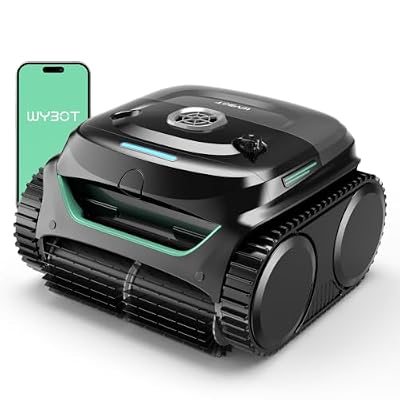
WYBOT C2 WYBOT C2
Our verdict:
Dual-filter option
For a compatible pool where floor, wall and waterline work matter more than a floor-only routine.
View on Amazon- Published runtime: up to 180 minutes in Eco mode
- 180-micron primary and 10-micron fine filters
- Maker lists above-ground and in-ground use
Keep in mind: Not the C2 Vision. Runtime varies by mode, and fine filtration does not treat algae. Check exact liner, pool-shape and handling instructions.
What the C2 is for
The C2’s main distinction here is dual filtration with a stated fine stage. WYBOT's current US page for the C2 and the retail listing agree on the key figures. They give 180 minutes, with that runtime in Eco mode only, and 2,152 sq ft.
They also agree on filtration: a 180 micron primary filter and a 10 micron fine filter. Both list seven cleaning modes. This is a well-matched set of claims, but it is still the maker's rating.
This is the C2, not the C2 Vision. No AI camera feature is assigned to it. For a closer look at this family, see our page on the WYBOT C2.
The Eco mode caveat
The 180 minute figure applies to Eco mode only. Other modes may run shorter. The other mode durations are not established by the Eco figure and are left separate.
That caveat matters when you plan a run. If you need the wall and waterline cleaned, you may not get 180 minutes. Treat 180 as the top figure, not the daily one.
Even at 180 minutes, runtime is not coverage. A large, irregular pool can leave areas untouched. A pool that suits the rated area may still need a second pass.
Navigation and walls
The listing mentions a built-in gyroscope and an optimized path that tries to reduce missed areas. It also says the robot climbs walls and steps and works the waterline. Those are catalog statements, not measured outcomes from this review.
The gyroscope is part of the described navigation design. Its presence does not establish a measured coverage rate or prove that every corner will be reached. Pool geometry remains part of the fit check.
The listing also mentions Bluetooth control. That is not treated as proof of remote start from a distance. Bluetooth is short range. Check the manual for what you can control and from where.
Dual filtration in practice
The two-grade filter is the reason to consider the C2. A 10 micron filter is meant for fine particles. A pool near a dusty field, a dirt lot or a sandy yard may collect fine silt that a coarser filter passes.
Picture a windblown pool after a dry week. The water looks dull, and a film sits on the floor. A fine filter may help clear such debris. That is conditional reasoning, not a measured result.
Fine media adds a separate care step. Check how the manual says to clean each stage and how to recognize loading. The filter needs attention during use; a stated particle grade does not establish one universal cleaning interval.
Clearer water is not clean water in the sanitizing sense. The filter does not treat algae. If the pool has an algae bloom, handle the chemistry and use the robot for debris afterward.
Large leaf loading
The 180 micron primary filter is aimed at leaves, sand and dirt. A large leaf load can fill any filter quickly. A pool under trees may need a hand net first.
Here the long runtime helps less than you would think. A full filter slows cleaning regardless of battery. In leaf season, plan to empty the filter between runs or mid-run.
If leaves are your only issue, the fine filter adds little. The extra care may not pay off. A simpler model with a coarse filter and easy emptying may serve you well.
Daily routine and filter care
For a fine-sediment pool, run the robot on a steady schedule. After each run, drain it and open both filter stages per the manual. Rinse them with clean water. Do not force fine mesh with a hard brush.
Let parts dry in shade. Check that the fine filter has no tears. A damaged fine filter lets particles pass, which defeats its purpose.
Charge only as the manual states, with the matching charger, in a dry spot. Do not leave the charger near the pool edge where it can get splashed.
Retrieval
The listing says the robot automatically docks at the pool edge when done, so it is easy to lift and carry out. This is a catalog claim. It describes where it stops, not how heavy it is when wet.
A big cordless robot is heavy once the water drains slowly through it. Plan a drain spot and a way to lift it safely. On a tall above-ground wall, a hook may be easier than reaching.
When a simpler model is the better pick
The C2 asks more of you. It has more filter parts, more modes and a larger rated area. If your pool is small and flat, much of that goes unused.
The A1 is the floor-only candidate for a compatible flat seasonal pool. B1 adds documented wall and waterline functions. C2 is the option to compare when its stated fine-filter stage is useful enough to maintain. Size and runtime alone do not establish the best match.
Do not choose the C2 only for the biggest number. The 2,152 sq ft rating describes the maker's claim. A modest pool does not need it.
Factors to consider in WYBOT pool cleaner reviews
Start with the task, not the number
Pick the job first. Floor sediment, a wall ring and fine silt are three different jobs. Each points to a different model.
Marketing numbers pull toward the biggest figure. That is a poor guide. Runtime and area are ratings. They say little about whether your pool's trouble spots get cleaned.
Ask one question: what do I see when I look at my pool each week? Answer that, then match the model.
Four pool cases
A simple flat seasonal pool. The floor is level, the liner is smooth and the pool opens for a few months. The A1 is the plain match here. Its current US page lists flat floors and floor cleaning, so confirm the floor before buying.
What settles it: your exact floor and the A1 manual. If the floor has a slope or deep wrinkles, the A1 is the wrong tool. Brush the wall by hand and skip the extra modes.
A permanent liner pool with a wall ring. Here the waterline film returns often. The B1 lists wall and waterline functions on its current US page. That is the feature that fits.
What settles it: whether the wall work suits your wall material and structure per the manual. The listing does not test this for you. Also check how the robot ends a run so you can reach it.
Fine windblown sediment. The pool sits near bare ground or a dry field. The C2 is the option with an explicitly stated 10-micron stage in this comparison. That is a documented media distinction, not a measured pickup result. Check whether the particles in your pool and the cleaning routine make that stage useful.
What settles it: how often you can rinse the filter. Fine mesh clogs. If you will not clean it, the benefit fades.
Large leaf loading. Trees overhang the pool. Leaves fill a filter fast, whatever the model. A hand net before each run does more than any spec.
What settles it: how easy the filter is to open and empty. Check the manual. A model you will empty often beats one with a fancier filter you skip.
Fit comes before features
WYBOT's pages classify these families for above ground and in-ground use. That support depends on exact floor, liner and structure fit per the manual. Do not read it as a blanket promise.
Three fit checks matter for an above-ground pool. First, floor shape: look for slopes and wrinkles. Second, liner type and condition: a worn or textured liner behaves differently. Third, wall structure: a tall wall with a ledge or top rail affects retrieval.
The A1 listing warns about slopes over 15 degrees and significant bottom wrinkles. Those are fit limits to check against the current US manual. Soft-sided pools often have both near the base.
If you cannot tell, contact WYBOT with your pool model and liner. Ask in writing and keep the answer. Do not rely on a forum post.
Version differences are real
A1 and B1 catalog figures differ from the current US maker pages. The supported current US figures used here are 120 minutes and 1,076 square feet for A1, and 120 minutes and 1,150 square feet for B1. They are kept with their own model records.
Read the version carefully. A listing may describe an older or different build. A higher seller figure does not extend the verified US model’s limit. Confirm which version is supplied before relying on any figure.
Features can differ too. The A1 listing names four modes, while the maker page lists floor only. Check what ships with your exact unit before counting on a mode.
Runtime and area are not coverage
Runtime is how long the battery lasts. Area is a rating. Neither promises a clean floor.
A pool with a complex shape can leave gaps. A heavy debris load slows work. A mode that climbs walls uses more battery than a floor pass.
A useful test comes after purchase. Run the robot once and look at what it missed. Adjust your schedule from what you see, not from the box.
Filter care sets your real routine
Compare the actual filter-care steps for each model. Access, media type and debris loading all matter. Two stages create more items to inspect, but the labels alone do not establish which complete care routine is quicker.
Match the care to your habits. If you will rinse after every run, a fine filter is workable. If you rinse once a week, choose a simpler design.
Keep these habits whatever you choose:
- Use the manual’s retrieval and draining method.
- Open the filter as the manual shows.
- Rinse with clean water.
- Check for tears or packed grit.
- Dry parts in shade.
Filtration is not sanitizing
A fine filter holds particles. It can make water look clearer. It does not kill algae or bacteria.
If your pool turns green, the cause is chemistry and circulation. Fix that first. Then let the robot remove loosened debris. Our guide to how to vacuum a pool covers the manual side of the job.
A robot also does not replace your pump and filter. Those circulate and filter the water. If your circulation is weak, see our pages on above-ground pool filters and the pool filter size calculator.
Retrieval and storage
Retrieval is a daily chore, so judge it early. The A1 listing says it parks near the wall on low battery. The C2 listing says it docks at the edge when done. The B1 listing does not describe parking, so do not assume it.
A hook may help on a tall wall. Plan where the wet robot will drain. Plan where it will sit between runs, out of direct sun.
Charge only per the manual, with the matching charger, in a dry area. Do not improvise a different charger or a damp spot. That is a safety and fit matter, and only the manual can settle it.
App features and what they do not mean
The B1 lists app control. The C2 lists Bluetooth control. We do not infer underwater control or remote start from either. We do not infer that a feature works at a distance.
An app can schedule runs and change modes. That helps if you travel or forget. It also adds a phone, a connection and updates to manage.
If you prefer fewer steps, weigh that against the value of scheduling. A model you can start by hand may be easier to live with.
Not a skimmer, not a pump
None of the three is a surface skimmer. Floating debris needs a net or your pool's skimmer. A robot works at the floor and, for some models, the walls.
A robot also does not replace pump upkeep. If circulation is poor, the pool fights you whatever you buy. Our pump calculator and pump setup guide help check that side.
Why C1 is not on the list
C1 is excluded from these picks because the selected catalog record has an unresolved version match. That does not mean all C1 models are incompatible with above-ground pools. Its manufacturer classification and the disputed listing are discussed separately in the existing C1 review.
How We Picked
The choices are three distinct model families with different cleaning tasks. They are not colors or capacity variants of one robot. The selected catalog records are non-Renewed listings.
The analysis compares each retail catalog record with WYBOT’s current US page. Manufacturer bounds are used for the current US versions. Catalog statements are attributed and are not combined with another version’s specification.
There was no hands-on testing. No pickup, reliability, warranty-coverage or safety-certification result is claimed. Customer ratings, product prices and savings are not ranking evidence here.
Where evidence was thin, we gave conditions instead of conclusions. For method and corrections, see our sources and corrections page and editorial policy. Our home page lists other pool guides.
Our verdict on WYBOT pool cleaner reviews
The useful conclusion from these WYBOT pool cleaner reviews is to choose the cleaning task first. The A1 fits a compatible flat pool with floor-only needs. The B1 fits a pool where the wall and waterline need regular work. The C2 fits larger pools or fine sediment, if you will rinse two filters.
The trade-off is simple. More modes and finer filters mean more parts and more care. A simple pool often does better with the simplest model, because you will actually keep it maintained.
Before buying, confirm three things against the exact manual: floor shape, liner and structure fit, and the version of the model you receive. Then run it once and watch what it misses. That test will tell you more than any rating.
Frequently asked questions
Do these WYBOT robots skim the surface?
No. None of these three models is a surface skimmer. They are cordless robots that work on the floor, and the B1 and C2 add wall or waterline work. Floating leaves still need a net or your pool skimmer. Parking near the wall is a retrieval step, not surface cleaning.
Do runtime numbers mean full pool coverage?
No. Runtime is battery time, and area is a rating from the maker or a listing. Neither promises every spot gets cleaned. Pool shape, debris load, floor condition and mode all matter. Use the numbers to compare models, then judge by how your own pool looks after a run.
Does a 10 micron filter sanitize the water?
No. A fine filter catches small particles, which may help water look clearer. It does not kill algae or bacteria. Sanitizing depends on your chemistry plan and circulation. If the water is green, treat the cause first, then use the robot to remove loosened debris.
Which model suits a flat seasonal above-ground pool?
The A1 is the simplest fit if the floor is flat and you only need floor work. Its current US page lists flat floors and floor cleaning only. Choose the B1 if you also want wall and waterline work. Check your floor, liner and structure against the exact manual first.