
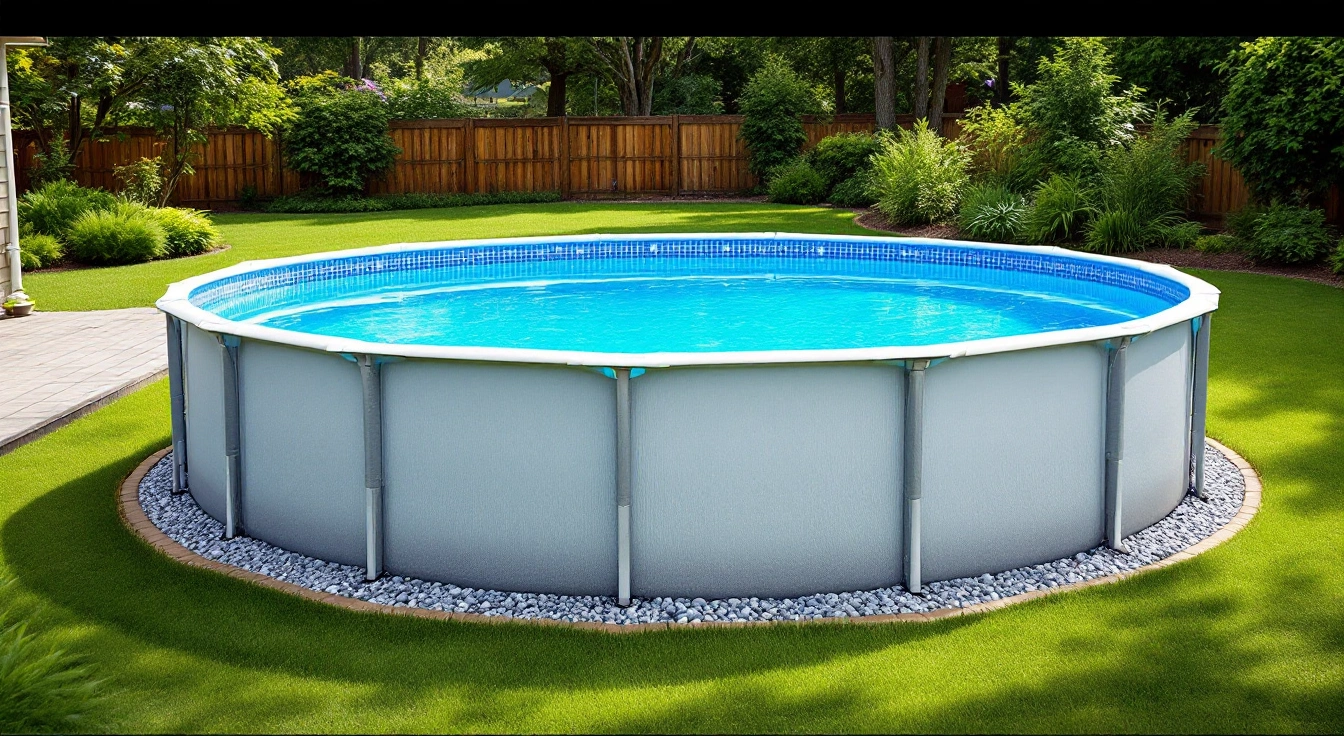
The question of how to vacuum pool to waste matters when you want debris out of the water rather than back through the filter. Waste mode sends pool water to a discharge route. It can lower the water level quickly. Use it only when the exact filter valve supports that function and you have a permitted place for the discharge.
How to vacuum pool to waste: confirm the valve
Read the model label and valve diagram. Waste and backwash are different functions. Waste bypasses the filter media on a system that supports it. Backwash reverses flow through suitable media to clean the filter. Neither label belongs to every cartridge or sand system.
The Pentair Sand Dollar and Cristal-Flo II manual is an example of a top-mount sand system with separate valve functions. It instructs the operator to stop the pump before changing valve position. Use your own model's procedure if the hardware or labels differ.
Don't loosen a hose or open a tank to invent a waste route. A closed cartridge housing isn't a discharge valve. If the manual doesn't show how to vacuum to waste, use a supported cleaning method and keep the system intact. The general vacuuming guide covers the filter route.
Plan where the discharge water goes
Check your local stormwater, sewer and pool-water discharge rules. Permission depends on place and water condition, so this page doesn't name a universal outlet. A storm drain, neighbor's yard or roadside gutter isn't automatically allowed. Don't discharge where water can reach an electrical supply or wash away soil.
Lay out a hose suitable for the waste connection. Secure it as the equipment instructions require. Keep the path free of kinks and arrange the far end before running the pump. A discharge hose that shifts midway can create a flood even when the pool connection is sound.
Consider the amount of water available above the lowest allowed operating level. You don't need to empty a pool to remove settled dirt. An above-ground wall and liner can depend on the filled condition specified by the maker. Don't turn a cleaning task into a full drain without that guidance.
Prepare the head and prime the hose
Remove larger leaves with a net first. Connect the manual vacuum head to its pole and hose. Lower the head into the pool, then submerge the hose progressively until it fills with water. Keep its free end under the surface so it doesn't refill with air.
With the pump off, attach the hose to the approved vacuum port or adapter. Use the correct fitting rather than a forced connection. Check the head's liner fit. A head that scrapes or catches on folds should be removed before any powered pass.
Make sure the pool is empty of swimmers. Keep people away from suction openings and discharge equipment. For electrical precautions, follow CPSC pool safety guidance. Wet ground near a plug or damaged cord is a reason to stop.
Select waste and make short passes
Stop the pump, move the valve to the documented waste position, and check the discharge connection. Restart by the pump's instructions. Confirm water is flowing where expected before crossing a dirty area. If it comes from an unexpected port, stop and recheck the valve map.
Move the head slowly. Focus on the settled patch rather than circling the whole pool while water is being lost. Keep the head submerged and watch the water level continuously. If the inlet starts drawing air, stop the pump at once. Don't rely on a timer while leaving the pool unattended.
Pause between patches if the allowed water level is close. Refill only by a method permitted for your pool and water supply. Don't rest a running garden hose near electrical equipment. Recheck the water level before resuming, and don't assume incoming water can keep pace with the waste flow.
Restore circulation without rushing the valve
Turn the pump off before moving the valve back to its normal position. Remove the vacuum connection as its manual directs. Restore water level and prime before restarting. A pump with an empty strainer or air-filled suction line needs its start procedure, not repeated dry attempts.
Look for leaks, stable return flow and a normal pressure reading after startup. Waste mode doesn't itself clean the media, so check whether a separate filter service is needed. Test and adjust pool water using the pool's care instructions after adding replacement water. Debris removal and water treatment remain separate jobs.
Record the route used and the level at which you stopped. That helps you judge whether a future short session is practical. If a large amount of fine dirt keeps returning, look at the source of the debris and the filter condition rather than wasting more water at every cleaning.
Frequently asked questions
Is waste the same setting as backwash?
No. On a valve that supports both, waste sends water out without its normal filtering path. Backwash cleans suitable filter media by reversing flow. Read the valve's own diagram for the ports and sequence. Stop the pump before changing position, and don't infer a function from hose location alone.
Can I vacuum a cartridge system to waste?
Only when that system has an approved separate discharge route and instructions for using it. A cartridge tank alone doesn't provide waste mode. Don't partly unscrew its drain or lid while the pump runs. Use the supported filter route or another compatible cleaning method if the required hardware is absent.
How much water will I lose?
It depends on actual flow and the length of the session. This guide doesn't assume a fixed gallon loss for every pump. Watch the pool level and stop before it reaches the manual's minimum. Short focused passes reduce unnecessary discharge, but they don't remove the need to monitor the water.
Can waste vacuuming make the water safe?
It removes the debris carried out with the water. It doesn't prove the pool has the right sanitizer level or water balance. Follow the pool's testing and treatment routine after cleaning and refilling. If algae or cloudiness persists, address that cause rather than treating vacuuming as a substitute for sanitation.
Verdict: how to vacuum a pool to waste
The safe answer to how to vacuum pool to waste starts with the valve manual and a permitted discharge route. Work in short passes and watch water level throughout. If the system lacks waste mode, choose a supported route. For normal filtered cleaning, return to how to vacuum a pool.