
1. INTEX Krystal Clear 2,100 GPH Sand Filter Pump 26645EG

Intex Krystal Clear SX2100 / 26645EG Intex Krystal Clear SX2100 / 26645EG
Our verdict:
Specified Intex pools
A sand pump/filter system for an Intex pool within its documented range.
View on Amazon- Pump and sand filter sold as a system
- Published pump flow 2,100 GPH; system flow 1,600 GPH
- Catalog lists a 12-inch tank and 50-lb sand capacity
Keep in mind: Confirm the exact Intex pool and fittings. Published flow is not your installed operating point; backwashing needs a wastewater route.
October 16, 2026. This review is based on catalog listings and manufacturer pages. We did not test any unit by hand.
The Intex 26645EG is the smaller of two Intex sand systems here. The catalog title lists a 12-inch tank, 50 lb sand capacity, and a 2,800 to 12,800 gallon range. Intex lists the same model family on its 12-inch Krystal Clear page. It is a full pump and filter system, not a bare tank.
Job and fit. This model suits a matching Intex pool that needs a pump and sand tank in one unit. Think of a family pool with a modest volume, where the owner needs to replace both the pump and filter. The catalog says it fits Intex above ground pools up to 12,800 gallons.
That is a catalog claim. It is not a promise that your fittings, hoses, or pool wall ports will match.
Two flow numbers. The listing gives a pump flow of 2,100 GPH. It also gives an in-pool system flow of 1,600 GPH. Those are different figures.
Treat 2,100 GPH as the stated pump capacity and 1,600 GPH as the stated system flow. Neither one confirms what you will see once your hoses, fittings, and sand bed add resistance.
Use the stated system-flow figure for a like-for-like comparison. If you compare it with your pool volume, do it as a first screen only. Our pool filter size calculator can help frame that check. The exact manual, pump curve, and head loss still decide real performance.
Daily routine. The listing describes a built-in 24-hour timer with 2 to 12 hour preset cycles. That makes scheduling simple. A timer does not replace watching the pool.
Check the water, the hose joints, and the area around the unit during early use. A preset cycle also does not tell you whether the water turns over enough for your bather load.
The catalog also lists a 6-function valve: filter, backwash, rinse, recirculate, drain, and close. Keep these modes separate. Each one sends water along a different path. Use the exact manual for the operating procedure; this comparison does not provide valve-setting steps.
Filter care. Media life and service intervals depend on the exact system and use. We give no guaranteed replacement interval or backwash schedule. Let the manual and the unit's own signs set the trigger, not an arbitrary day count.
Backwashing sends dirty water out of the system. You need a legal, safe place for it to go. Do not assume a nearby lawn, street drain or shared outlet is an approved disposal route. Plan this before you buy.
Sand handling. The catalog lists a 50 lb sand capacity. It does not say sand is included. Do not assume it ships in the box.
Check the full option package before you order. Check access to the filter tank and equipment pad for the maker's loading and service method. The pool wall is not a place to stand or support media.
Service and parts. Check whether the exact pump, valve seals and hoses have available matching replacement parts. A complete-system purchase should have a clear service route as well as the right fittings. Confirm written seller and maker terms for the supplied option rather than transferring a family-level promise.
Keep circulation and water care separate. A pump moves water and the sand bed collects debris. Neither function establishes sanitation or a measured clarity result here. Keep the pool's water-testing and treatment routine separate from the purchase decision.
Reasons to choose something simpler. Pick a simpler setup if your pump still works well. Compare the cost and compatibility of repair or a matched tank-only option before replacing both parts. A cartridge filter may also suit a small pool where you do not want to manage backwash water. If your pool is not a documented compatible Intex model, check every connection before you buy.
Who should skip it. Being near a range limit is a reason to verify the exact documented match, rather than automatically buying the next size. The next model covers a different band, with a different tank and stated flow. A higher range does not mean better for every pool. Match the model to the pool and the manual, not to a bigger number.
2. INTEX Krystal Clear 3,000 GPH Sand Filter Pump 26651EG
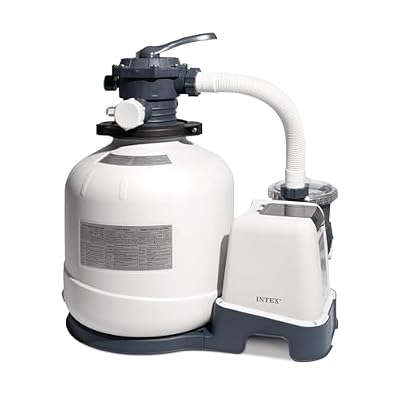
Intex Krystal Clear SX3000 / 26651EG Intex Krystal Clear SX3000 / 26651EG
Our verdict:
Larger matching Intex range
Compare the documented Intex pool match when a complete sand system in this stated range is needed.
View on Amazon- 3,000 GPH pump flow; 2,450 GPH stated system flow
- Maker range: 5,500 to 19,600 gallons
- 16-inch tank; 120-lb sand capacity
Keep in mind: Not an installed-flow measurement or an automatic upgrade over SX2100. Confirm exact pool, fittings, media purchase and backwash requirements.
The 26651EG is the larger Intex system. The title lists a 16-inch tank, a 120 lb sand capacity, and a 5,500 to 19,600 gallon range. The maker describes it on the 16-inch Krystal Clear page.
This is the current 3,000 GPH model. It is not an older 2,800 GPH version.
Job and fit. Compare this model for a documented Intex match within its stated range. Bather load or wall height alone does not establish that the larger pump is suitable. The catalog says it suits Intex above ground pools from 5,500 to 19,600 gallons. That is a catalog claim for fit, not a check of your hose size or port style.
The ranges of the two Intex models overlap. A pool of 8,000 gallons falls in both. That overlap does not mean the bigger unit is better.
The stated sand load is larger. Check the actual footprint and service-water requirements rather than inferring them from the model name. Our pool pump calculator can help you check turnover thinking before you decide.
Flow numbers. The listing gives a pump flow of 3,000 GPH and an in-pool system flow of 2,450 GPH. As with the smaller model, these are two separate labels. Neither is a measured installed flow. Your hose length, fittings, and sand condition will change what the pool actually sees.
Do not size by horsepower. Horsepower alone does not establish an installed operating point. Use the pump curve, the manual, and the filter's service flow where the maker gives them.
Daily routine. The timer matches the smaller model: 24 hours, with 2 to 12 hour presets. Use the pool and filtration manuals for the appropriate operating routine. A preset is a control limit, not a calculation of the right filtration schedule.
The same listed timer can serve pools with different documented needs. A timer also does not remove the need to look at the pool.
The same 6-function valve appears here. It filters, backwashes, rinses, recirculates, drains, and closes. Use the manual for each step.
We give no general valve tutorial, because the manual for your exact unit governs. Never guess at a setting.
Filter care. This review gives no fixed sand-life promise. Check the exact media and service instructions. Heavy leaf fall, sunscreen, or a pool near trees may change how often you clean. Follow the manual and the unit's signals.
The bigger tank holds more sand. When it is time to change media, plan for the weight and access to the filter tank. Our guide on how to change sand in a pool filter covers that job in general terms. Check it against your manual.
A note on sand claims. The catalog lists a 120 lb sand capacity. Do not assume sand is in the box. Confirm the option package before you buy. A mismatch here can leave you with a tank and no way to run it that day.
Backwash space. Check the system's actual backwash requirements and an approved disposal route. A ditch, slope or shared drain is not approval by itself. A small lot may make disposal constraints more important than tank size. Check local rules before you plan the route.
Vacuum use. If you plan to add a vacuum, think about the operating point. A vacuum hose adds resistance and changes what the pump sees. Our guide on how to vacuum a pool with a sand filter explains the general routine.
Package and service limits. Confirm the exact option, connections and service documents before ordering. A title with the right flow number is not enough if the manual, fittings or replacement parts belong to another model. Keep a copy of the supplied label and parts list.
Reasons to choose something simpler. Compare the smaller model only when the exact pool and hydraulic requirements support it. It has a smaller stated sand load; check dimensions before assuming a space saving. A compatible cartridge system may be worth comparing when backwash disposal is the main constraint.
If your current pump runs well, a tank-only change may be enough. Buy the documented match for a real need, rather than treating the larger label as a better result.
3. XtremepowerUS 13-Inch 2,400 GPH Sand Filter Pump

XtremepowerUS 13-inch Sand System XtremepowerUS 13-inch Sand System
Our verdict:
Conditional complete-system option
A catalog-listed above-ground kit to compare only after its exact pool connections and hydraulic requirements are established.
View on Amazon- Catalog lists pump, tank, valve and stand
- 2,400 GPH is labelled pumping capacity
- Catalog lists a four-way valve and 43-lb sand capacity
Keep in mind: Installed system flow and exact fittings remain unconfirmed, and we could not match this listing to the maker's exact model number. Catalog gallon claims are a screen, not a proven match; no certification claim is adopted.
The XtremepowerUS unit is a different brand and a different family. The catalog title lists a 13-inch tank, 3/4 HP, 2,400 GPH, a 4-way multi-port valve, and use up to 10,000 gallons. The maker lists it on its 13-inch sand filter pump page.
What the maker page confirms. The maker page confirms a 13-inch, 2,400 GPH unit for above ground pools. It does not confirm exact identity with this catalog listing. Do not merge it with other XtremepowerUS units, such as the 1/2 HP models. Check the model number before you pay.
Job and fit. The catalog's up-to-10,000-gallon claim is a first screening limit for a complete kit. It is not enough to establish a match. The catalog lists a filter tank, pump, valve, stand, and fittings.
That is a catalog claim. We cannot confirm what is in your box. Look at the full option package and the adapters before you order.
Fittings are the main unknown. Nothing here shows that the hose ports match an Intex-style pool or any other pool. We have no flow curve and no manual. Treat compatibility as unresolved until the exact documentation supports the pool, pump, valve and connection together.
Pump flow. The 2,400 GPH figure is the labelled pumping capacity. System flow is unknown. Do not treat 2,400 GPH as what reaches your pool.
The 10,000 gallon figure is a catalog claim, not an automatic match for your pool. Use it as a first screen only.
Do not size by the 3/4 HP number either. Horsepower says little about flow once head loss enters the picture. Use the manual and the pump curve when you can get them.
Valve and gauge. The listing describes a 4-way valve with filter, backwash, rinse, and waste modes. This is a different valve from the Intex 6-function type. Keep the modes separate in your head.
A built-in pressure gauge and a transparent view window are also listed. A gauge reading helps you judge when to clean, but the manual should set the trigger, not a fixed day count.
Backwash and waste modes send water out of the system. You need an approved disposal route, just as with the Intex units.
Basket and tank. The listing describes a large strainer basket with a quick-lock lid and a UV-resistant blow-molded polyethylene tank. It says the tank holds up to 43 lb of sand. These are catalog claims.
We have no basis to call the basket the largest in any class, or to promise the tank will never fail. Check basket condition and use the manual's service and stop instructions. Do not wait for a flow problem before learning where debris collects.
The 43 lb figure is a capacity. Do not assume sand is included. Confirm before you buy, and check the maker's loading method and access to the filter tank.
Documents before purchase. The exact manual and model label should settle the operating limits, connections and service parts. If those documents are missing or do not match the order, pause the selection. A retailer's broad feature list does not establish the missing fit or installation requirements.
What filtration can establish. A filter collects debris through its media. That does not show a measured pickup result or establish treated water. This comparison makes no promise about green-water prevention, chemical savings, self-priming or a maintenance-free season.
Reasons to choose something simpler. If your current pump is sound, a tank-only swap or a repair may cost less. A cartridge setup may suit a small pool better. For an Intex pool, compare its documented system match before shopping for cross-brand adapters.
The Intex name alone does not confirm every port or year. Compare your options with our above ground pump and filter combo guide.
Factors to consider when choosing the best sand filter for above ground pool
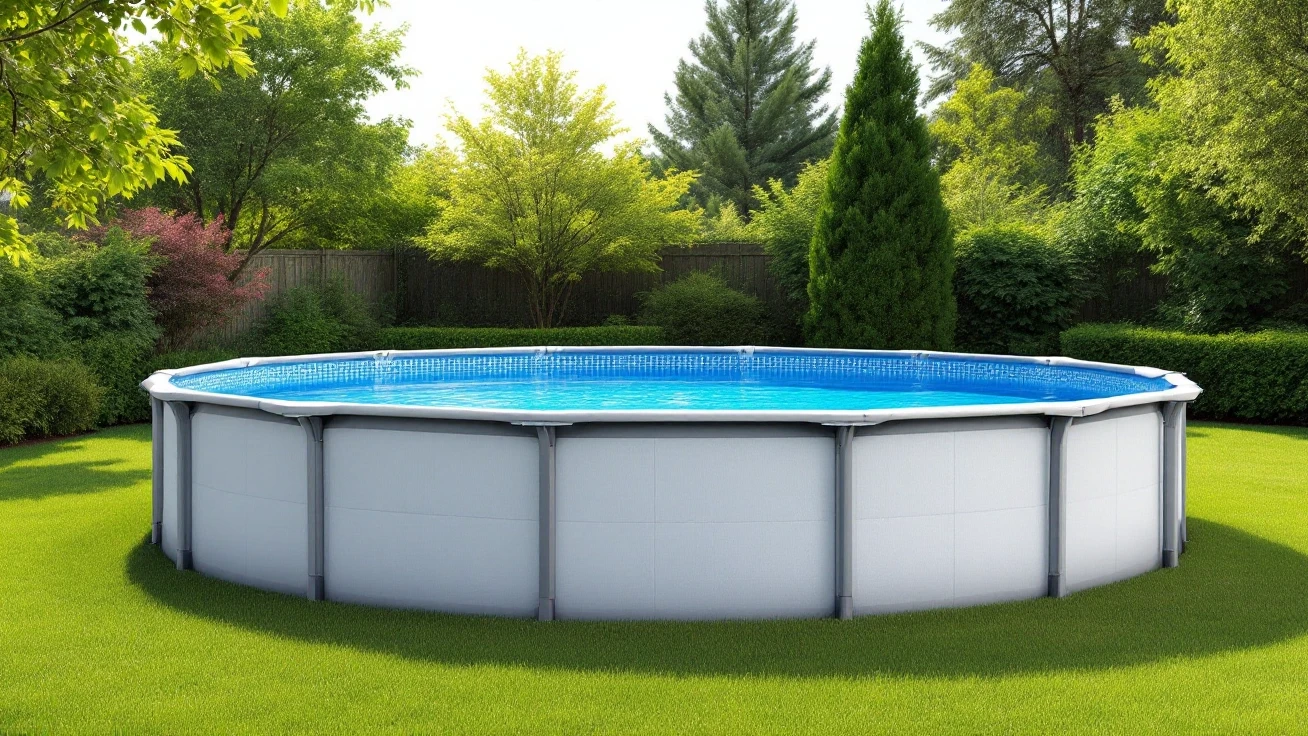
Start with the pool, not the filter. A sand system is a pump, a tank, a valve, and hoses working together. The label numbers describe parts. Your pool decides the result.
Pool volume is a first screen only. Say your pool holds 9,000 gallons. All three models claim to cover that. That tells you little.
If it holds 15,000 gallons, only the larger Intex model lists it in range. If it exceeds the XtremepowerUS catalog limit, that listing fails the volume screen. Volume narrows the list.
It does not pick a winner.
Pump flow versus system flow. The Intex pages give two numbers: pump flow and in-pool system flow. The XtremepowerUS listing gives one. Comparing the XtremepowerUS pump rating with the lower Intex system rating mixes different metrics.
Compare like with like, or compare none. Neither number is measured flow in your yard.
Head loss and hoses. Long hoses, tight bends, and extra adapters all slow water. A pool set far from the equipment pad loses more flow than one beside it. Have an unsuitable or uncertain pipe route checked against the exact system requirements rather than sizing up to compensate by guesswork.
Fittings and pool match. The Intex listings say they suit Intex above ground pools. The XtremepowerUS listing says above ground, with no brand match. If you own a non-Intex pool, verify port sizes and adapters first. If you own an Intex pool, its exact model and connections still need checking; the brand name does not settle that question.
Backwash space. A sand filter sends dirty water out during backwash. Picture the route. A slope or nearby drain does not establish an allowed discharge route.
A tight lot can make access and disposal more restrictive. If you cannot dispose of the water legally, choose a cartridge filter instead. Local rules vary, so check yours.
Media handling. Sand handling is a service task at the filter tank, not at the top of the pool wall. Check the maker's loading method and suitable access before buying. A 120 lb load is a different job than a 43 lb one. For the full routine, see how to change sand in a pool filter.
Care triggers. Use the manual, not a calendar. A pool under pine trees loads the filter faster than a covered pool in a quiet yard. The pressure gauge on the XtremepowerUS listing is one cue. Intex users should look to their manual for signals.
Timers. The Intex listings describe a built-in timer with 2 to 12 hour presets. A timer runs the pump on schedule. It does not replace watching the pool. After a storm or a big party, check the water yourself.
Parts access. Ask what you can replace. Check whether a failed pump or valve can be replaced separately on the exact system. If your pump is fine, a tank-only swap may be wiser.
If it is not, a full system may make sense. Compare the cost of each path before you choose. We list no prices.
Cartridge or DE instead? A compatible cartridge system uses a different cleaning routine from a sand backwash system. DE is another media choice with its own service requirements. Our DE versus sand filter guide explains the tradeoff. If you rent the home or lack drainage, a cartridge unit may be the practical choice.
Adding a vacuum. If you plan to vacuum with the pump, think about the operating point. The vacuum hose adds resistance. A pool that runs fine without it may slow with it. Our guide to vacuuming with a sand filter covers the general steps.
Filtering is not sanitizing. A sand filter traps fine debris and helps clarity. It does not kill germs. You still need a sanitation plan that fits your pool and local advice.
Ownership cost. Think beyond the box. Sand, hoses, adapters, and water for backwash all add up. We give no prices, so check current figures yourself. A lower box price may not produce a lower total when the supported installation needs other parts.
Before selecting a system, collect the information that can actually settle fit.
| Information to gather | Why it changes the choice | Where to confirm it |
|---|---|---|
| Exact pool model and water volume | Narrows the supported pool range | Pool label and owner manual |
| Connection type and approved hose route | A volume match does not prove physical fit | Pool and filtration documents |
| Pump curve and filter service requirements | A flow label does not establish the operating point | Exact system technical documents |
| Backwash disposal and service access | The system must be maintainable at its intended location | Equipment instructions and applicable local requirements |
| Package contents and replacement parts | A system title may cover several order options | Exact order and model-specific parts list |
Scroll for more →
How We Picked
We worked from catalog listings and manufacturer pages. We did not test any unit. We cannot report pickup, noise, or reliability.
We kept three full sand pump systems, not bare tanks. Two are Intex models from the same maker, with different tank sizes and ranges. One is from XtremepowerUS. We make no claim that these are three unrelated brands or that any is the best for every pool.
We separated catalog claims from maker facts. Where a figure appears only in a listing, we said so. Where a maker page confirms a model family, we linked it.
We skipped any certification, warranty detail, or media life we could not match to a source. We have not looked at prices or customer ratings.
For method and corrections, see our editorial policy and sources and corrections page. For the wider category, see our above ground pool filter guide.
Our verdict on the best sand filter for above ground pool
There is no single best sand filter for above ground pool owners. The right pick depends on your pool, your fittings, and your drainage.
Compare 26645EG and 26651EG by their exact Intex pool match, stated system flow and different sand loads. The overlap between their ranges calls for a documented fit check, not an automatic upgrade.
The XtremepowerUS listing is a conditional alternative while its exact fittings and hydraulic documents remain to be confirmed. If your pump already works, compare repair or a compatible tank-only route. If backwash disposal is unsuitable, consider a compatible cartridge system and its care method.
Frequently asked questions
Does a sand filter sanitize my above ground pool?
No. A sand filter catches fine debris and can help water look clearer. It does not kill germs or replace a sanitation plan. You still need a method suited to your pool, and you should follow your manual and local advice.
Does a higher GPH number mean a better filter?
Not always. The listed GPH is a stated pump figure, not measured flow at your pool. Hoses, fittings, and sand condition change real flow. The Intex pages also list a lower system flow. Match the model to your pool and manual instead.
Is sand included with these units?
We cannot confirm it. The listings give sand capacity, which is not the same as sand in the box. Check the full option package before you order. Plan for the weight of the media and how you will load it at your wall height.
Do I need a place for backwash water?
Yes. Backwash and waste modes send dirty water out of the system. You need an approved route for it, with enough room and no harm to neighbors or drains. If you cannot arrange that, a cartridge filter may suit you better.