
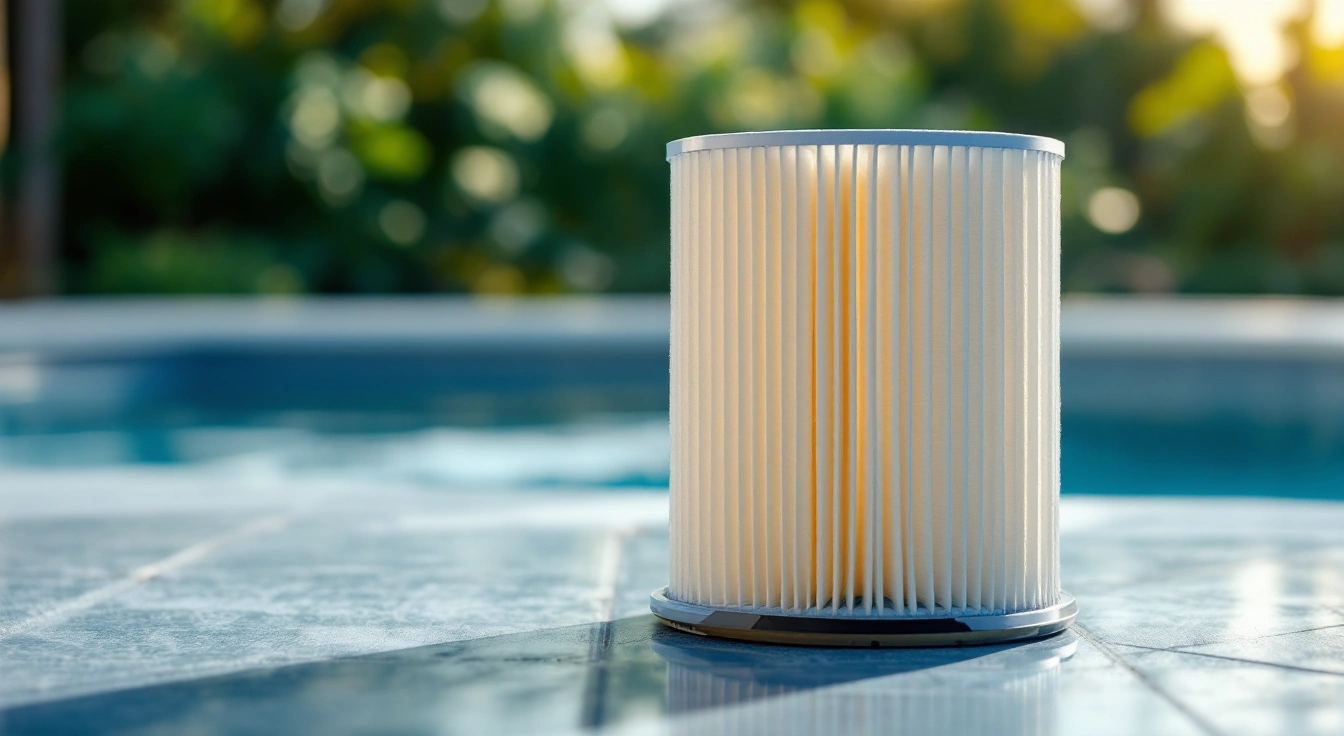
A DE vs cartridge filter decision is mostly a choice about the work you'll do after dirt is trapped. DE uses a media coat on a support. A plain cartridge filters through its pleated element. Check the exact equipment limits and service process before deciding which task suits your above-ground pool.
DE vs cartridge filter: the decision matrix
| Decision | DE system | Plain cartridge system |
|---|---|---|
| Filtering material | Allowed DE coat on the specified support | Pleated element matched to the housing |
| Routine service | Model-specific cleaning and media refill | Element removal, rinse and inspection |
| Waste handling | Water and spent media need an allowed route | Rinse water and cleaning products need an allowed route |
| Flow check | Exact rated operating and cleaning limits | Exact rated flow and element area |
| Ongoing supplies | Allowed media plus service parts | Replacement element and approved cleaner when needed |
| Pool suitability | Must be shown for the exact system | Must be shown for the exact system |
Scroll for more →
The table compares filtering methods, not product picks. It doesn't treat every DE unit or cartridge tank as right for an above-ground pool. You still need the pool construction, connections and pump operating flow. A filter planned for a permanent setup may be unsuitable for a storable pool even if its fittings can be adapted.
Evidence method for this comparison
This comparison uses maker descriptions and service documents checked on October 14, 2026. The Pentair FNS Plus page shows a vertical-grid DE design. The Clean & Clear manual shows plain cartridge service.
These documents explain how those designs work. They don't give one score for each type. No pickup test or owner survey was done for this page.
Price and service-life differences remain unknown without matching current equipment and local work scope. Selection starts with proven fit, then asks whether the owner can maintain that system as required. The pool type comes before any cost or care preference.
What DE media changes about the work
DE stands for diatomaceous earth. In a DE filter, allowed media forms the required coat on a support such as a grid. The support and coating work together. Don't assume a bare grid can be used like a plain cartridge. Find the correct media and dose in the exact manual before the first cleaning session.
Service differs by design. Some DE systems backwash. Others use another cleaning or regeneration process. A partial cleaning can have a different refill instruction from a full clean. That is why a fixed scoop count isn't useful: it skips the model, element size and amount of media left inside.
The media task also needs a waste handling plan. Spent DE and pool water shouldn't be sent wherever a hose happens to reach. Read the filter instructions and the local discharge rules. Keep media handling within the product's safety directions and avoid breathing loose dust.
Think through the whole session before choosing the type. The filter may be quick to backwash but still need a media refill, a check or later deep cleaning. A short valve action doesn't describe the total care job. Count setup and cleanup as part of the burden you will actually carry.
What a DE owner should have ready
- The exact filter manual and media spec.
- A clear record of the last complete clean and any partial cleaning.
- An approved route for discharge water and spent media.
- Sound closure parts, a working gauge and the required relief path.
- Space to handle and check the support without damaging it.
If these details are unclear, the DE route hasn't been fully checked. That doesn't make the type bad. It means the missing work should be understood before changing an existing system with it.
What a plain cartridge changes about the work
A plain cartridge normally uses its pleated element without a DE coat. Loose debris is rinsed from the folds by the allowed method. The element can then be inspected for tears, crushed pleats or damaged end caps. A damaged element may let water bypass the planned filtering path even when it looks clean.
The element needs room for removal. Check the clearance above the housing and the path for lifting it out. A filter squeezed under a deck can be awkward to service. That access question can matter more than a small difference in tank footprint on a sales sheet.
Rinsing isn't always enough for sticky residue. Use only a cleaner allowed for the element and pool treatment system. Don't invent a soak recipe from another filter's instructions. A chemical that suits one sanitizer system may not suit another.
An easy rinse task still includes safe opening and startup. You must isolate power, relieve pressure, check seals and seat the closure properly. The cartridge-cleaning guide walks through the questions that precede those model-exact steps.
What a cartridge owner should have ready
- The housing manual and exact replacement element number.
- Clear access for lifting the element out without scraping it.
- A garden hose and a suitable place for rinse water.
- The allowed seal lubricant and any specified cleaner.
- A clean-pressure record at the normal pump setting.
Don't add DE to a plain cartridge because the pleats resemble a DE element. The filter maker must approve its media. A shared appearance isn't evidence that the housing, pressure behavior or service route will tolerate an additive.
Check flow using real working conditions
Start with the pump's known operating flow, not its advertised maximum. Water moves through hoses, valves and other equipment, and those add resistance. A pump can produce a different flow at other speeds or system conditions. The filter must suit the actual range it will see.
Check the exact filter rating and any other equipment limits. A larger area may offer more room for trapped dirt in an exact design; area alone isn't a fixed fit rule. Don't apply one generic GPM-per-square-foot constant to every cartridge and DE model.
Use the pool filter size calculator for arithmetic and known-limit checks. Its planning result doesn't certify a filter. If the pump flow or exact model rating is missing, the equipment verdict remains unknown. That is a useful result because it shows which measurement or document you need next.
A practical comparison worksheet
Write each candidate's exact model in a distinct column. Add its operating flow limit, connection type, service method and allowed pool use. Then add the pump's known flow range and the pool's construction. Leave missing cells blank with an explicit note saying they are unknown.
Reject a candidate that breaches a stated limit. Don't award it a compensating score for easier cleaning or a lower price. A weighted chart can hide a failed fit need behind attractive features. Suitability should be a gate before convenience is compared.
Water use and waste handling depend on the task
A cartridge rinse uses water though the filter isn't normally backwashed. A DE cleaning task may discharge water and media. Neither type can be labelled universally water-free. The actual amount depends on the design, dirt load and service method.
If your property has limited discharge options, check them first. A filtered pool can still be inconvenient if its required cleaning water has nowhere allowed to go. Don't buy a filter on the assumption that a storm drain will be available later.
Also consider where rinsing will happen. You need a surface and drainage route that won't send dirty water into a plug or electrical box. A dry storage area for the element and media is distinct from the wet cleaning area. A compact equipment pad doesn't remove those practical needs.
Ownership cost needs comparable inputs
Check the equipment price, replacement element or media costs, waste handling needs and any setup work. Use the same time period and work scope on both sides. A filter-only price and an installed-system quote cover different work.
Service life isn't a number to copy from a brand claim into every pool. Debris load, treatment and care vary. Ask what happens if an element is damaged early and whether the correct part remains available. That parts question helps you judge a low initial price without pretending to forecast the exact lifetime.
Keep labor distinct from supplies. If you'll perform only the owner tasks allowed in the manual, find which work still needs qualified service. Don't assume all care is free simply because you have a hose. Your time and the space needed for cleanup are real trade-offs even when no invoice is involved.
Choose by the task you can sustain
For an owner who wants to check and rinse a removable element, a suitable plain cartridge offers a clear care routine. Its main drawback is handling and eventually changing that element. It still needs safe housing service, enough area and correct flow.
For an owner with a suitable DE system and a clear plan for media and waste, DE may remain a sensible choice. Its main drawback is the extra work with filter media. Don't replace a sound setup only because a generic chart calls another type better.
For heavy leaf loads, remove bulky debris before it reaches either filter. For persistent fine dirt, check the equipment and water treatment before choosing a new type. A torn support, faulty valve or unsuitable flow can spoil results regardless of the filtering material.
Frequently asked questions
Does DE always filter more finely than a cartridge?
Use the exact maker's rated results instead of a fixed type number. Ratings can use other conditions and media. This comparison doesn't convert a generic particle-size claim into guaranteed pickup. Sound internals, correct flow and the specified service task also matter. Neither type establishes sanitation from filtration alone.
Can I convert a cartridge tank to DE?
Only a conversion expressly allowed for that exact housing should be considered. A pleated element isn't proof of fit with added media. Check the maker's parts and service instructions. Don't use an online powder dose as permission to change the tank's filtering system, pressure behavior or cleaning method.
Which type is easier to clean?
A plain cartridge avoids a DE refill step; it needs removal, rinsing and inspection. DE service varies by design and can include media handling after cleaning. Check the whole session, including access and waste handling. The easier task is the one you can carry out correctly with your actual equipment.
Will a different filter remove the need for pool chemicals?
No filtering-type choice proves safe swimming water. Debris collection and water treatment are distinct functions. Keep the pool's testing and sanitizer task. If clarity stays poor after service, check water flow, media condition and treatment instead of assuming a new filter will replace those tasks or resolve every cause.
Verdict on DE vs cartridge filter selection
DE vs cartridge filter selection should start with sourced pool fit and flow. Then choose the service task you can sustain: rinsing a plain element or cleaning and refilling DE media. Check filter sizing before buying, and leave unsupported equipment matches unknown.